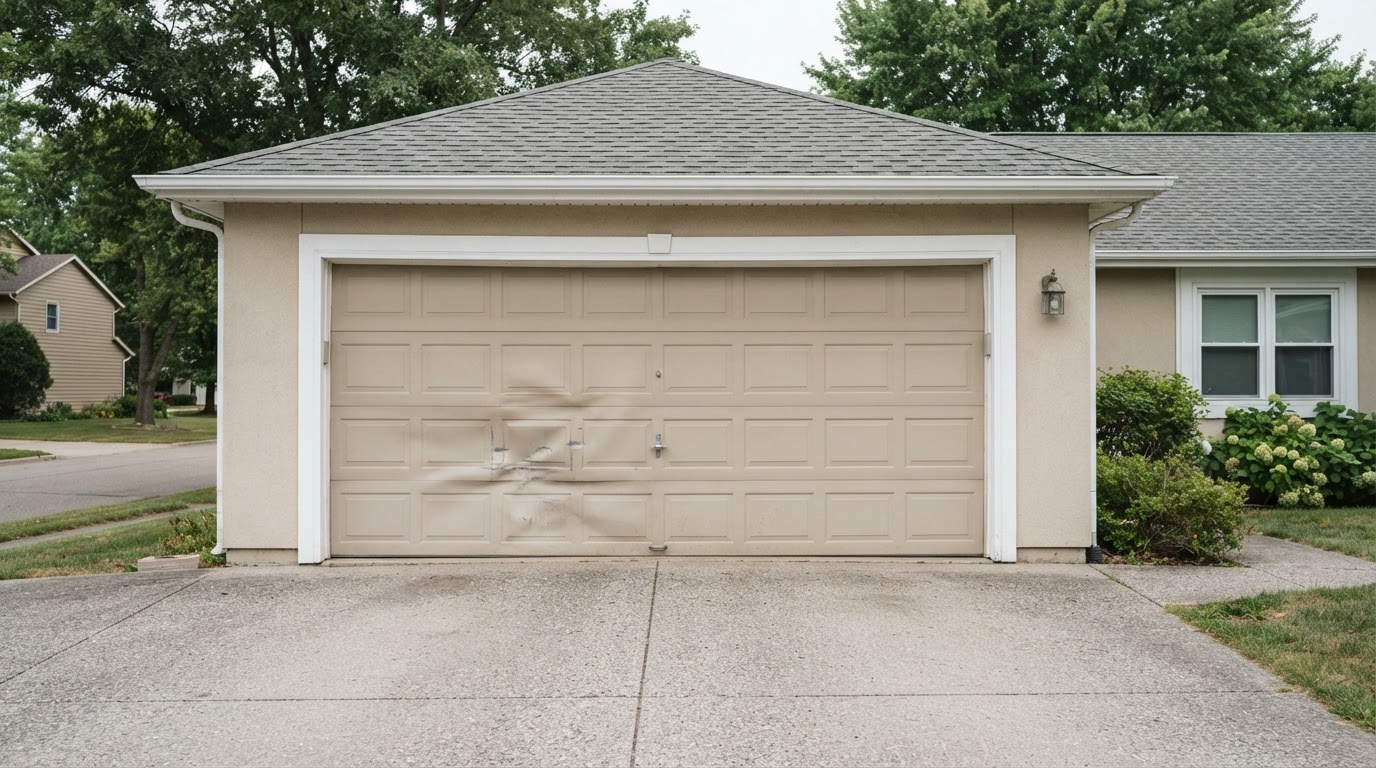
Residential beige sectional garage door with a dented lower panel, illustrating when a single garage door panel may need repair or replacement.

Garage Door Panel Repair

Can You Replace Just One Garage Door Panel Instead of the Whole Door?

A backed-into basketball hoop, a runaway tricycle, or a storm-driven branch can leave one section of your garage door dented, cracked, or bent. The good news is that you do not always have to replace the entire door. Whether a single garage door panel can be swapped out depends on a few practical details — and on what caused the damage in the first place.

Call (762) 319-2931

When one section of your garage door takes a hit, your first question is usually whether the whole door has to go. Nobody wants to tear out a perfectly good door over one bent panel. In plenty of cases, you don't have to. The answer comes down to the type of damage, the door itself, and whether a matching section is still available.

Here is a straightforward look at when replacing one garage door panel makes sense, when replacing the entire door is the better call, and what to do right after you notice the damage.

Can a single garage door panel be replaced?

Yes — under the right conditions, one damaged section can be removed and a new panel installed in its place. A typical residential garage door is built from several horizontal sections stacked together, each joined by hinges and held in the tracks by rollers. Because those sections are individual pieces, a single damaged one can sometimes be unbolted and swapped without disturbing the rest of the door.

Whether that is actually an option depends on a handful of factors: the style and manufacturer of your door, the size and configuration of the damaged section, how old the door is, and whether a compatible replacement panel is still produced. If you'd like to read more about how that process works, our garage door panel and section repair page walks through the details.

Not every door qualifies. Some custom or discontinued styles no longer have replacement sections available, and some damage goes deeper than the panel itself.

When replacing one panel may make sense

A single-section replacement is usually worth exploring when the damage is isolated. A shallow dent in one lower panel, a crack from a minor impact, or a bent section from a backing-into mishap can often be addressed on their own — as long as the rest of the door is still in good shape.

It tends to be a reasonable option when the door is relatively recent, the other sections are sound, and the opener, springs, cables, and tracks are all still working as they should. If the damaged area is the only problem and the door opens and closes normally otherwise, swapping that one section can be a cleaner fix than starting over.

The trade-off is appearance. Even a well-matched panel can sit slightly differently in color or texture next to sections that have spent years in the Georgia sun. For some homeowners that is a fine compromise; for others it is the reason they lean toward a full door.

Call (762) 319-2931

When replacing the entire door may make sense

Sometimes a single-panel repair isn't the right move. When more than one section is damaged, the door is older, or the hardware and sections have seen a lot of wear, replacing the whole door can be the more practical choice.

A full replacement often comes up when a matching panel simply can't be found, when several sections are affected, or when the underlying structure has taken a hit. It can also make sense if the springs, cables, rollers, and tracks are nearing the end of their service life alongside the panel damage — in that case you'd be paying to repair one section of a door that's already on borrowed time.

That doesn't mean every damaged door needs to be replaced. It means weighing the cost and condition of the current door against a new one. When the better path is a full new door, our garage door installation and replacement page covers what's involved.

Why finding a matching panel matters

A replacement panel has to actually fit your door — not just the width, but the section height, the panel style (flush, raised, ribbed, carriage-house), the color, and the insulation. Two doors that look alike at a glance can differ in ways that make a panel sit poorly or stand out once it's installed.

Manufacturer matters too. Doors from the same brand can still vary by model year, and a color that was offered a decade ago may not be produced the same way today. That's why it's hard to promise an exact match before the door is identified and availability is checked. A close match is often realistic; a perfect one isn't guaranteed.

The honest way to find out is to have the door looked at. Knowing the manufacturer, model, and age makes it much easier to tell whether a compatible section is available at all.

What to do after you discover a damaged panel

A dented or cracked panel isn't always just cosmetic. If the damage is near the cables, tracks, or hinges, it can affect how the door moves — and operating a door that's already compromised can turn a panel issue into something more serious.

If the door is bent, crooked, binding, or visibly damaged around its cables or tracks, stop running it. Forcing it up and down can pull rollers out, bend tracks, or damage the opener. This is also where the line between a panel problem and a broader repair gets blurry — damage that changes how the door opens and closes often falls under garage door repair rather than just a cosmetic panel swap.

Don't try to bend a steel section back into shape yourself, and don't attempt to unbolt the panel with the door still under spring tension. Garage door springs and lifting cables stay under heavy load even when the door is closed, and loosening the wrong hardware can be dangerous.

Don't force a damaged door

If a damaged panel is making the door stick, tilt, or bind, keep using it as little as possible. The safest move is to leave it in place and have it inspected before it's operated again.

  • Stop running the opener if the door moves unevenly.
  • Keep people and vehicles clear of a crooked door.
  • Don't loosen hinges, cables, or spring hardware on your own.
Local garage door help

Getting the damage checked locally

The clearest way to know whether you can replace just one garage door panel — or whether a full door makes more sense — is to have someone look at it. All Access Garage Doors inspects damaged doors and talks through the options so you can decide what fits your home and budget. We help homeowners and businesses in Thomaston, Barnesville, Zebulon, and surrounding Middle Georgia communities sort out panel repairs, section replacements, and full new doors.

There's no single answer that covers every door, because every door is a little different. But the right answer usually starts with a quick inspection and a conversation about what's actually going on with yours.

Damaged garage door panel? Let's take a look.

Whether your garage door has one damaged panel or several sections that need attention, All Access Garage Doors can help you understand your options. Contact us to have the damage checked.

Call (762) 319-2931